Introduction
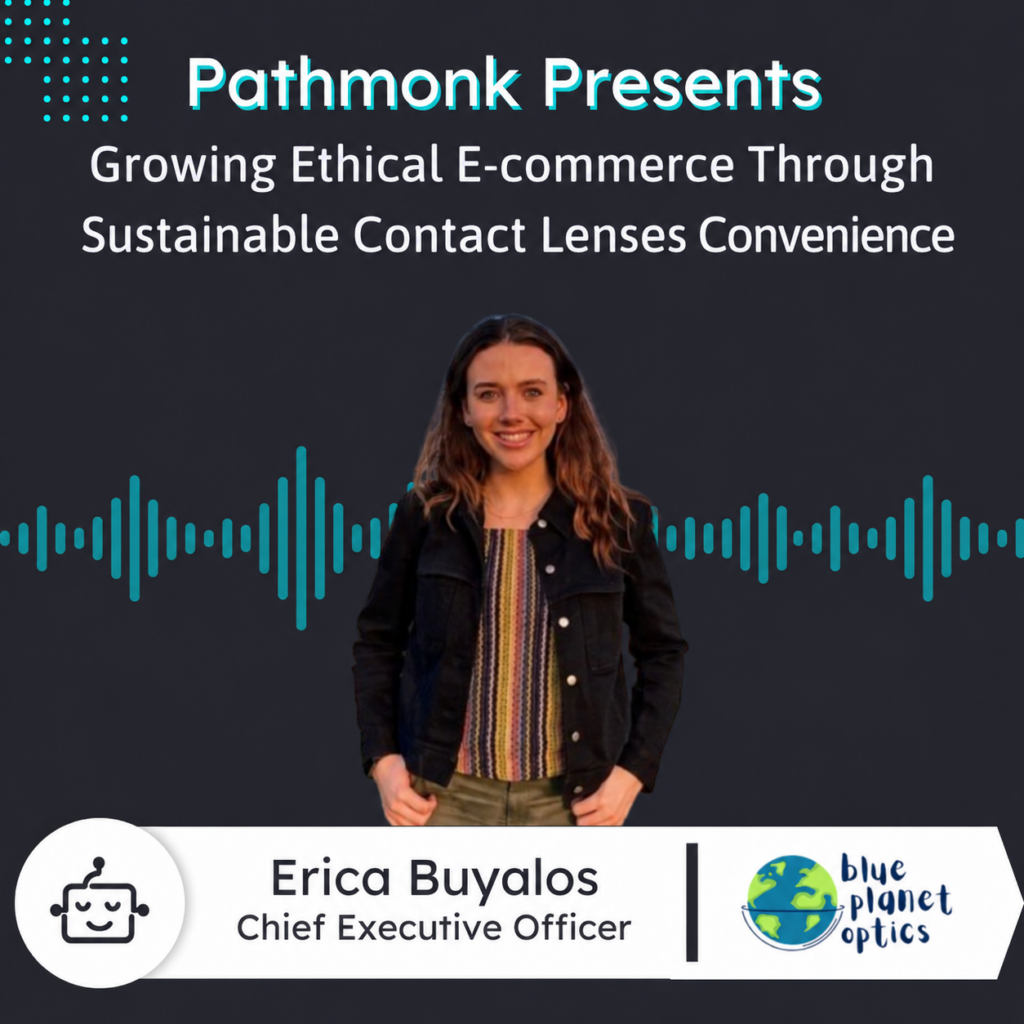
Erica Buyalos, CEO of Blue Planet Optics, joins Pathmonk Presents to discuss how her company is reshaping the online contact lenses buying experience with a mission-driven model. Blue Planet Optics combines e-commerce convenience with social impact by donating one dollar from every box sold to eye care treatment for someone in need and upcycling returned packaging.
In this episode, Erica shares the personal story behind the business, the role of SEO, affiliate partnerships, and social media in driving growth, and how website simplicity helps customers find the right products faster. It is a strong conversation for marketers and founders interested in conversion, sustainability, and building a brand with purpose.


Increase +180% conversions from your website with AI
Get more conversions from your existing traffic by delivering personalized experiences in real time.
- Adapt your website to each visitor’s intent automatically
- Increase conversions without redesigns or dev work
- Turn anonymous traffic into revenue at scale
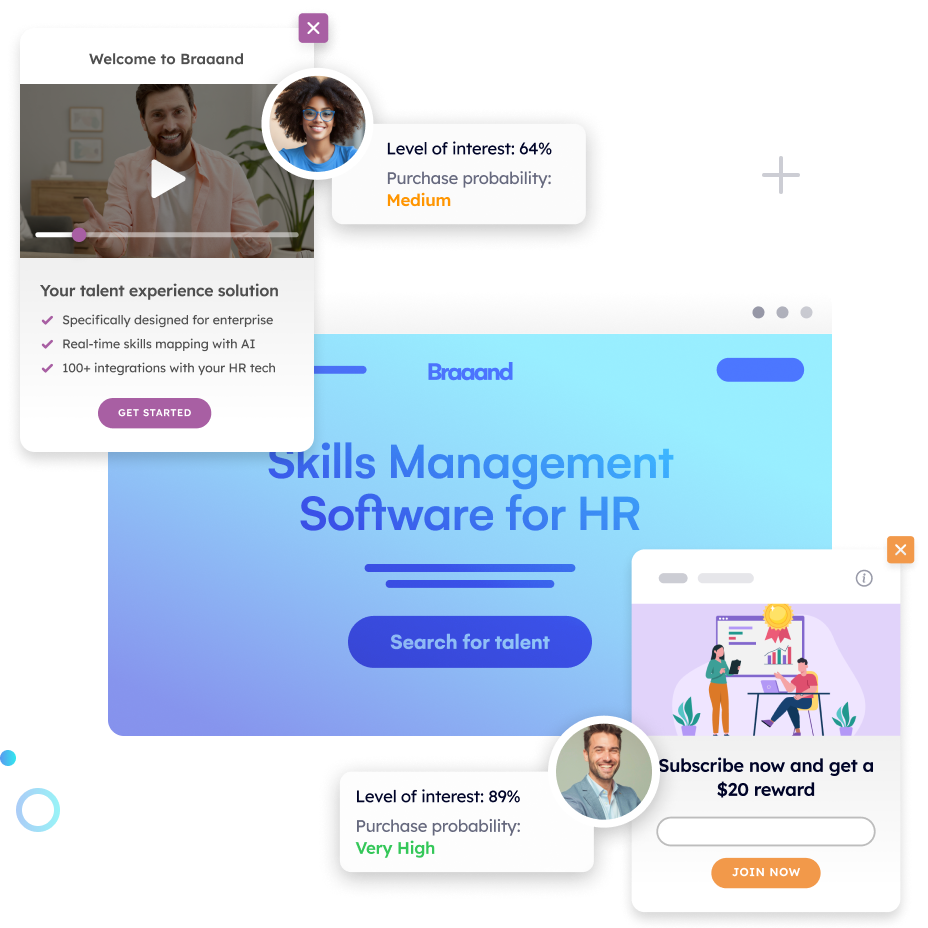
Rick: Pathmonk is the AI for website conversions. With increasing online competition, over 98% of website visitors don’t convert. The ability to successfully show your value proposition and support visitors in their buying journey separates you from the competition online. Pathmonk qualifies and converts leads on your website by figuring out where they are in the buying journey and influencing them in key decision moments with relevant micro experiences like case studies, intro videos, and much more.
Stay relevant to your visitors and increase conversions by 50% by adding Pathmonk to your website in seconds by letting the AI do all the work and increase conversions while you keep doing marketing as usual. Check us out on pathmonk.com. Hey, everybody. Welcome back to Pathmonk Presents. Today, we’re joined by Erica.
She’s the CEO of Blue Planet Optics. Erica, welcome to the show.
Erica Buyalos: Thank you so much.
Rick: Excited to have you, Erica. And, maybe we get started with the basics, right? We talk about Blue Planet Optics. Essentially, what’s the heart of what your company does, if you could share that with us? And also, if you were to meet a friend over coffee, how would you describe what you do?
Erica Buyalos: Totally. So Blue Planet Optics in practice is an e-commerce website where you can buy your contact lenses. Head over to our website, find the contacts you wear, upload your prescription, and in a couple of days they’ll be at your doorstep. The only difference, because there’s a lot of companies that do the same thing, the only difference is for every box of contact lenses that we sell, we donate a dollar to an eye care treatment for someone in need.
So when you’re buying your contacts, you can feel good about that they’re giving back to someone else. And when you’re done with the packaging, you can send it back to us and we’ll get it upcycled for you. So it’s like the… We’re trying to make it just a little bit better option to the e-commerce contact lens world.
Rick: Gotcha. And in a way you offset the… So I have a thought, right? And there’s a lot out there that you can buy, right? Totally. We live in a consumeristic society, if you will. And of course, lenses are a different category, but in a way, just by what you’re doing, essentially, you buy this and then we’re donating to someone in need.
It’s two birds with one stone, right? So I think that’s amazing. I wanna give my praise to that. Personally, I think it’s amazing. I’m also curious, is there a little bit of the origin story, if you will? What’s driven you so far to do something like this?
Erica Buyalos: Yeah. I think what got me fascinated with it is I’ve worn contacts most of my life. Like, thanks for my parents for passing that down. But they also worn contacts most of their life, so it’s been a part of my family forever, and I was like, “Oh.” I’m getting ready one morning, putting my contacts in same way I always do. I throw away the packaging, and I’m like, “Wow, there is so much packaging being created just by me for wearing these contacts for 10, 20 years,” that kind of thing.
So I wanted to see if I could intercede because these products are manufactured, they’re the same product across person to person. It’s just about where you buy them. And the pandemic happened, people start thinking more about where their money is going. They want to shop small. They want to vote with their dollar more.
So I thought, “Why not try to do it with contact lenses?” I was in college at the time. I entered the idea into an entrepreneurship contest on campus. It picked up a little bit of traction, and then a few years later, here we are. So that’s what got me started with it. It was my story with contact lenses, and honestly, just being frustrated with the limited options I had to buy them, not feeling like it was doing any good, and wanting to see if I could do something better with it.
Rick: Gotcha. Gotcha. Okay. No, that’s really interesting, and it’s always… the origin stories are always, “I had a problem with X, and then I created Y,” right?
Erica Buyalos: Created Y.
Rick: Yeah, exactly. And those are the best ’cause you know it comes from a personal need. There’s a motivation behind it. And the fact that you’re now selling lenses but also contributing to someone in need, that I think that’s what stands it apart from the competition.
Staying on the note of the type of people that buy from you, what kind of customers do you think are the best fit for your product? Is it only people that need lenses, or is it people that also donate to charity, what have you observed so far as your customer base?
Erica Buyalos: Totally. That’s a great question. I think one thing that’s nice about Blue Planet is we do offer pretty similar pricing to a lot of the big retailers, like, that you could buy your contact lenses from. I don’t wanna name any of them specifically just for the legality purposes. But bigger retailers that people are already shopping from, we’re very similar in pricing, if not lower.
So from the customer perspective, they’re going through the exact same process. So honestly, anyone who wears contact lenses and wants to buy them online could buy from Blue Planet. That being said, the ideal customer, yeah, would care a little bit more about shopping from a small business, which most people love to do. If sustainability is something that’s important to you and you’re willing to take the time to collect your packaging and send it back to us, you’re our ideal candidate.
But otherwise, we take care of all of the other stuff, all of the donation aspect. The nonprofit we work with is the one who decides where the specific dollars are being used most effectively for what eye care treatments, for instance. So from a customer perspective, if you wear contacts and you buy them online, you can come to us.
We take care of the rest. So I would say if you care about those things, you’re our ideal, but anyone can come to buy from us.
Rick: Amazing. Yeah. I’m curious also, how do these people… If you wanna get a little bit more technical, this is a performance marketing podcast, so we get into the weeds for a second, Erica.
How do these people discover you? Are there any channels at the moment that are your go-to for bringing in more customers? Just give us an idea of that, if you will.
Erica Buyalos: Yeah. That’s a great question. A lot of our incoming sales come from SEO, Google search, that kind of thing, and then social media.
So we have our own social media that we post about Blue Planet, and then we also work with influencers, specifically optometry students, optometrists, influencers a lot of times, or just other niches as well. But a lot of students will post about Blue Planet and how it’s relevant to their optometry practice, and then they have a discount code, and they make a little bit of commission for referring people over to us.
So between affiliate marketing, socials, and SEO, that’s our main driver to our website.
Rick: Okay. Now, of course, one of the main things that you want people to do is then end up on the website, right? So the question is then how much of a role does it play in putting in new customers, and is there anything about it that you think really works at the moment as far as getting people to buy, also understanding how the whole process works?
Or maybe even on the flip side, anything that you got your eye on improving, right? So there might be things that need, if not fixing, but just kinda like improvement as far as the conversion rate goes.
Erica Buyalos: Totally. I think the… My favorite thing about our website is also the thing that needs the most improvement.
So I think when you come to us, our website is pretty simple. I would say wearing contact lenses, prescriptions can be very confusing to read in terms of you might wear contacts and know… You’re looking at the box and you think, “Oh, I know Alcon,” which is the manufacturer of the lenses, but you might not know the specific one you’re wearing or how to read the prescription for whatever that is.
So what we’ve done is try to make it as simple as possible, and we have pictures everywhere, so if you know what your box looks like, if you know the name of your lens, basically the customer figuring out which lens they wear is oftentimes the most confusing part for them in the shopping process.
And we’ve tried to make that discovery process as simple as possible. That being said, I’d love to improve it even more, where that is even easier and they maybe don’t even have to locate the lens. They could just upload something, and then our website takes them to where they need to be. Haven’t gotten there yet, but I would say we’ve done a pretty good job of making it as simple as possible up until that point.
And yeah, our website plays a big role in all of it, ’cause a lot of times people are coming direct to us with the intention of buying the specific lens. They’re not shopping around for anything. So they’re coming knowing what they want, and whether or not they’re gonna click purchase is just about whether or how soon they want their contacts.
So I would say it’s simple, but almost too simple right now.
Rick: Oh, gotcha. Okay. Yeah. So there’s a few improvements that you might see on the horizon, just thinking about personalizing it a little bit more, making it… Okay, I understand. I understand.
Yeah. And I think it’s fair. That’s for most websites, so.
Erica Buyalos: Totally.
Rick: Yeah. Maybe we touch on your experience with the site so far. You said it, it started out as a project and then it’s been around for a little while. From your experience, what actually makes a website convert?
Do you have any favorite tools? Any tactics or little tricks even that work wonders for you when it comes to getting people to click that purchase button?
Erica Buyalos: Yeah, that’s a good question. I think a big tool that I’ve loved is any heat map tracking software. I used to use Hotjar quite a bit.
I switched over to PostHog a little bit a little while ago, ’cause I just felt like it was more relevant to my website. And that being said, one thing that’s really nice about the business I’m in is I’m not convincing anyone to buy something that they don’t need, like a shirt or something like that, where it’s a treat purchase.
I’m giving them… They’re coming to me for something they’re gonna buy either from me or someone else. So, I get to focus on just where the customer is having a frustrating experience in something that they’ll end up purchasing from. So basically just making my process the most fun process of that experience.
But I would say, yeah, the heat map tracking software helps convert, and then abandoned cart software is a big one, just getting people to actually finish the checkout process. But those, I would say, are my biggest tools for website improvement. That being said, I haven’t made very many changes to the website very recently, but I would love to, and I know that’s what Pathmonk is all about.
Rick: Yeah, of course. And as soon as you mention Hotjar, that’s, in a way, the way the tool works. But we’ll get to talk about it in a little bit. Now, maybe we switch gears for a second, Erica. We talk about you as a leader, as the CEO of Blue Planet Optics.
What does a typical workday look like for you? I know, sometimes things might get a little bit crazy, fulfilling orders and I’m sure you have a bunch of things to think about, but give us a glimpse into what are the main things you focus on a day-to-day.
Erica Buyalos: Yeah. I think, so it’s myself, and then I have a team of four student interns that work for me as well.
So my days, I just try to look, like, at this moment, we’re just really focused on growth, right? So I recently switched over to Blue Planet being my full-time job. I was working another full-time job up until a couple of months ago. So now we’re basically just focused on growth and putting the gas pedal on as opposed to the last four years pretty much have just been getting what needed to be done due to limited time.
But I would say day-to-day typically looks like, yeah, getting those necessary things done, like fulfilling orders, reaching out to customers to reorder, taxes, things like that. And then, moving on to what the growth engine is. So that being publishing things for SEO, blog posts, things like that, filming videos for social media, reaching out to affiliates, or potential affiliates, and that’s pretty much what a day looks like.
So necessary and then growth and all that comes with that.
Rick: Right. Okay. Yeah. That makes a lot of sense, just being focused on that. Now, there’s that other side of things where if you wanna grow, then you have to, in a way, just learn new things and there’s a flood of content out there, right?
So it’s easy to get lost. But I’m curious, how do you sift through it? How do you stay focused and keep learning? And maybe there are places, people, routines you turn to for inspiration or even just keeping a calm mind, if you will.
Erica Buyalos: For sure. That’s a great question. I think I have goals, and the way my personality works, I think I have goals of how much I want to… I know how much I need to push out to equal the amount of growth that I wanna have, for instance. So whether, say, that’s publishing, for instance, five blog posts a week.
I try to just set those goals and parameters out there, like reach out to this many people, publish this many blog posts in a week span of time, and however I get there is fine.
So whether that’s I do five in one day, and then, like, today I’ll probably spend six, seven hours filming TikToks for our channel, changing my clothes six times so you don’t know it’s the same day, that kind of thing. So whereas another week I might break it up and do each of those things for an hour.
So kinda just changing it up so it doesn’t get too repetitive. But I would say everybody gets burned out from time to time, and I personally am… There’s areas to be detail-oriented in my business, when you’re fulfilling orders, when you’re checking prescriptions, and other times you kinda just put the gas pedal on and see what you can put out there and, yeah, and then pull back when you get burned out or that kind of thing.
In the growth area for me has been my approach, and someone else might take it differently, but yeah, that’s my… Some days are six hours of work, some days are 12. It just depends, for sure.
Rick: Fair enough. Yeah. Yeah. Yeah. There’s a lot of work, I’m sure. Curious, how do you pull back? How do you relax and unwind and just not think about work at all, if you will?
Erica Buyalos: Yeah. I’m learning that as well. I think I’ll push myself really hard and then get burned out and pull back. But spending time with family, typical stuff, spending time with friends and family, and I think sometimes those things will force you to just slow down and stop depending on what’s going on, what’s around you, where you can help, and it makes you pull out of everything and say, “Okay, I’ll get back to it when I get back to it.
Nothing is earth-shattering.” And just, yeah, trying to be present with friends and family as much as possible pulls me out of that cycle. And I’m learning the balance more because I spent the majority of my business working another job full time, and then this was my side hustle, if you will, for so long.
So I’m just learning how to put it down when I need to, because I’m so excited to be working on it full time now. Yeah.
Rick: It’s a skill, right? Yeah. It’s definitely a skill, something that you practice. It’s not like, oh, you know, you can switch off and switch back on as you want it.
Right. It just needs a little bit of that, but it’s really fast-paced, I’m sure. And yeah, it can be hard, but it is good that you have that balance in a way.
Erica Buyalos: Thank you. And I think, yeah, a lot of it I can do from my mobile phone, so it’s not perfect in practice. If someone’s on our customer service hotline, you may be texting them back at the movie theater and stuff like that when you’re with your families.
Not ideal, but eventually I’ll be able to delegate a lot more of those kind of things. And, right now I’m honestly… It’s very new to me. This literally just became my full-time job, which I’m very grateful for, a couple of months ago. So I’m learning what that balance looks like and rhythms and how to show up best for my employees and things like that.
So yeah.
Rick: Of course.
Erica Buyalos: I’m actively learning as of this interview, for sure.
Rick: Right. Right, right, right. Yeah. Running like crazy. Speaking of running and being fast-paced, we have a quick rapid fire segment in this podcast. Perfect. Before we wrap things up, I’d love to jump in with you. And, again, it’s just a few questions to keep things light and engaging.
Excuse me, engaging. So would you be ready for it?
Erica Buyalos: Absolutely. Let’s do it.
Rick: Erica, when it comes to consuming content, what kind of content do you prefer? Is it watching things, listening or maybe reading?
Erica Buyalos: Ooh, I would probably say listening for sure. Love a podcast, love listening to a documentary in the background, that kind of thing.
Rick: Okay. Sweet. Yeah. So what’s the latest piece of content you listened to? It could be an audiobook or, as you mentioned, a podcast, that you picked up. And, were there any ideas or gems that really stuck with you in it?
Erica Buyalos: Yeah. I think, I love the How I Built This podcast by Guy Raz. That’s one of my favorites.
So yeah, I would say I’m always listening to that one. And yeah, different interviews from there always spark my interest. The one… It’s a really old one now, but the one about the app Hinge really sparked my interest, ’cause I think that entrepreneur reminds me a lot of myself, where he’s very comfortable with just figuring things out as they come and just putting out fires as opposed to trying to plan every element ahead, and that one really stood out to me.
For sure.
Rick: Okay, that’s a good one. I’m sure many of the founders and the marketers out there will relate to that ’cause it’s an amazing podcast, so good shout.
Erica Buyalos: It’s so good. Yeah.
Rick: Yeah. If you had a magic wand and you could fix one frustrating thing in your life with tech when it comes to running your business or your life in general, what would you pick?
Erica Buyalos: Ooh, I think website design that’s outside of just entering in wording, just things, how they appear on the… I understand why website designers charge so much, because it takes forever. So if I had a magic wand, it would be that someone could fix every single little issue on my design that pops up, so it’s not me trying to figure it out at 3:00 in the morning every time.
Rick: That’s a good one. Yeah. Yeah. For sure. You spend infinite hours on that, and yeah, I can relate.
For sure. What’s one repetitive task that you’d love to put on autopilot forever?
Erica Buyalos: For sure. I would love to put on autopilot the repurchase reminders that I send out to customers, but I haven’t found a technology that could do it for me, like HubSpot or anything like that, because every single person’s is different.
So one person needs a reminder in 30 days. The same person, the next time they purchase, will need a reminder in 75 days, or something like that. So I haven’t found something that could pick up those nuances and remind them at the correct time. So that, I would love to find a tech for, would be amazing.
Rick: Okay. Well, if anything, when people listen to this, I’m sure there’s a few vendors out there that might be in that space that might reach out to you, just so you know.
Erica Buyalos: That’d be great. I’d love that.
Rick: All right. Perfect. So Erica, as we wrap things up, and before we do, I wanna thank you, of course, for being on the show with us today.
It was a very insightful conversation. I also wanna give you the last word. If someone forgets everything about the interview today, what is the one thing that they should remember about the work you guys are doing?
Erica Buyalos: Yeah. I would say if you’re buying contact lenses online anyway, and you’re interested in purchasing from a small business, I would love for you to check us out.
We do the donation with every purchase, a dollar per box sold, and we’ll take back your packaging and get it upcycled. So if that’s something that sparks your interest, we would love to have you.
Rick: Amazing. And if people do want to check you guys out, where can they go?
Erica Buyalos: Just our website. blueplanetoptics.co is… that’s where you can find us.
Rick: Perfect. Okay. So we have the plug there. Of course, we’ll put the link in the show notes, but just in case, it’s good to hear from you. Erica, again, thank you so much for the insightful conversation. Thanks for sharing with us how everything started and where you guys are going.
It sounds really exciting. So, I wish you the best of luck, and I’m sure many of our listeners will relate to maybe the start of the journey, right? We have a lot of founders and entrepreneurs as our listenership. So, it’s gonna be a great one for sure.
Erica Buyalos: Sounds good. Thank you so much for having me. I really enjoyed the conversation.
Rick: Likewise. All right, Erica, I wish you a wonderful day.
Erica Buyalos: Thank you.
Rick: Bye, everyone.