Introduction
Brian Phan from Amara Medical Aesthetics joins Pathmonk Presents to share how a specialized oculofacial plastics clinic blends advanced cosmetic care with complex reconstructive medicine to build patient trust and long-term growth. He explains how the team serves a wide range of patients, from cosmetic seekers to those needing functional eyelid and dry eye treatment, while creating a smoother path from research to consultation.
The episode also explores how website leads, before-and-after results, provider credentials, and social media content can attract new patients. For marketers and founders, this conversation offers practical insight into trust-driven healthcare marketing, patient journeys, and balancing care delivery with business growth.


Increase +180% conversions from your website with AI
Get more conversions from your existing traffic by delivering personalized experiences in real time.
- Adapt your website to each visitor’s intent automatically
- Increase conversions without redesigns or dev work
- Turn anonymous traffic into revenue at scale
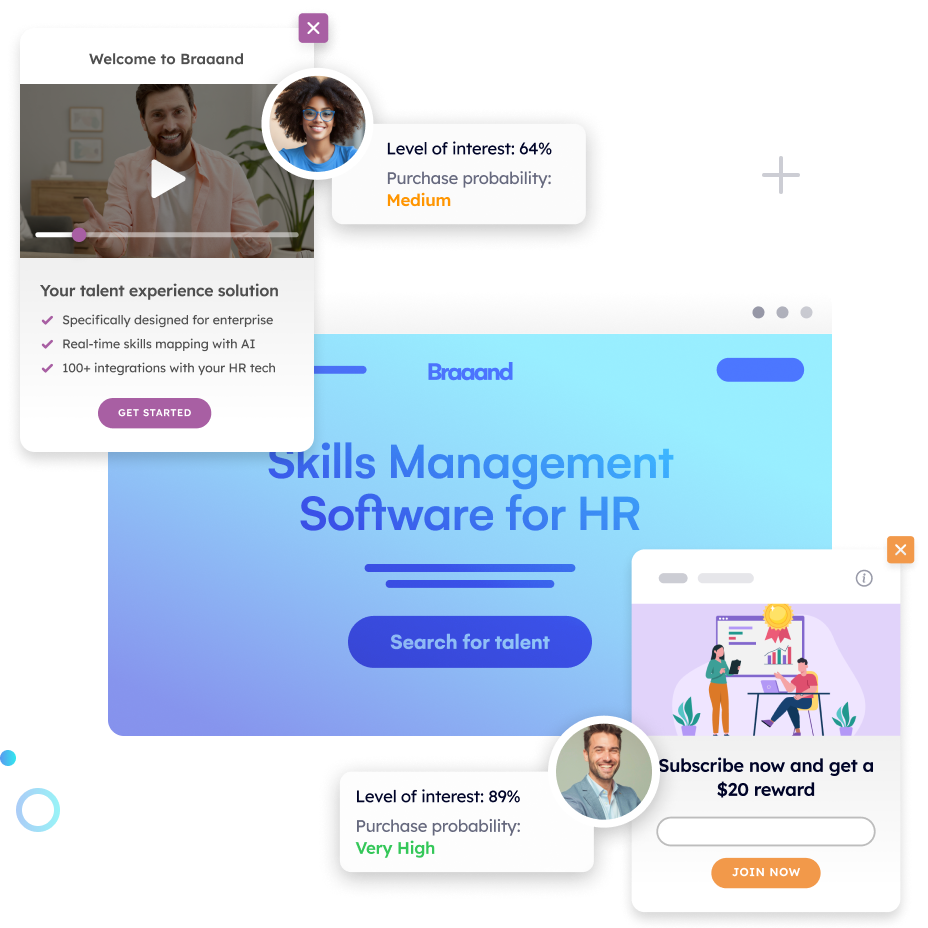
Rick: Pathmonk is the AI for website conversions. With increasing online competition, over ninety-eight percent of website visitors don’t convert. The ability to successfully show your value proposition and support visitors in their buying journey separates you from the competition online. Pathmonk qualifies and converts leads on your website by figuring out where they are in the buying journey and influencing them in key decision moments with relevant micro experiences like case studies, intro videos, and much more.
Stay relevant to your visitors and increase conversions by fifty percent by adding Pathmonk to your website in seconds by letting the AI do all the work and increase conversions while you keep doing marketing as usual. Check us out on pathmonk.com. Hey, everybody. Welcome back to Pathmonk Presents.
Today, we are joined by Brian. He’s the oculoplastics PA at Amara Medical Aesthetics. Brian, welcome to the show.
Brian Phan: Thanks for having me here, Rick.
Rick: Of course. Excited to have you, Brian. And, maybe we get into it. We start with the basics. Tell us a little bit about what’s the heart of what Amara Medical Aesthetics does.
How would you describe it to someone new? If you were to explain it to a friend over coffee, how would you describe what you do?
Brian Phan: Yeah. So Amara Medical Aesthetics is an oculofacial plastics clinic, located in Bellevue, Washington. And what oculoplastics means essentially is that we just specialize a lot in the eyes and the face.
And what’s really unique about our clinic is that we have a dual focus. We not only just do advanced cosmetic procedures for people like eyelid surgeries and things and whatnot, but we also do a lot of complex medical reconstructive care, which is a very unique aspect because a lot of people are just focused on aesthetics, but don’t really realize that when it comes to plastic surgery, there’s a lot of medical, functional things we can do provide our patients to help them see better or just feel more confident in who they are in their personal face and who they present in the everyday world kind of thing.
It’s founded by our surgeon, Dr. Kristen Tarbet. She has a very impressive resume. Not only that she has over thirty years of experience, but she’s triple board certified. She’s trained in not only aesthetic surgery, but facial plastics, but also neuro ophthalmology, just showing the wide depth of her skill set, but also the breadth of her skill sets, that she can not only provide that art of aesthetics, but also, if you need it, provide that medical aspects to really take care of you from your functional aspects base.
So I just find it really impressive, and that’s what kinda really drew me to work at Amara Medical Aesthetics when I first graduated. And I actually just graduated about six months ago from University of Washington. I knew I wanted to work in a field ophthalmology, focusing a lot on the face and eyes because I just think it’s such a huge part of our quality of life.
And seeing Dr. Tarbet, her experience and her dual skill set of doing both medical and aesthetics is what really drew me there because I know that she’s someone I can really learn from and really provide services to the full extent of my training.
Rick: Of course. I’m sure it’s interesting to be graduating, and congratulations, by the way. Appreciate it … to then go under, the mentorship, let’s say, of someone with 30 years of experience. That’s a golden ticket right there.
Brian Phan: Yeah …
Rick: So, so that, that’s amazing. I wanna touch on your patients, if you will. The people that actually walk in and want to get something done. Now, can you speak to the type of person that’s essentially working with you guys, and what can they expect when they come and work with you?
Brian Phan: Yeah. So oftentimes I’m typically the first provider a lot of Dr. Tarbet’s patients sees. And our patients kind of range anywhere from usually older individuals to middle-aged to even younger individuals. I’ve had some pediatric patients here at our clinic too. It really just depends on what kind of service they’re seeking per se. And the reason why they see me first is that I usually conduct the initial pre-ops, and just determining if they are a surgical candidate to see Dr. Tarbet, essentially.
Anything from our older populations who have droopy eyelids that’s impeding their vision, or a lot of excess skin is kinda going over their eyelids impeding their vision as well. Or it could be just younger people who are just wanting to refine their look and aesthetic appearance or younger patients who have congenital issues where they’re born with congenital defects of their eyelids being drooping down, and being able to provide that aspect of fixing that issue for them.
And a lot of times too, I kinda just do things on my own, without needing the patient to see Dr. Tarbet, things such as thyroid eye disease management, so very complex medical things, to removing skin cancer lesions for testing to see if it’s cancerous or not, tearing issues or also even addressing things like styes, chalazions.
And something I’ve been kinda growing for my own patient base is something called dry eye, a dry eye program to really manage a very chronic and debilitating disease that a lot of people have, just as a standalone disease, but also just from after surgeries, from eye surgeries or eyelid surgeries, things of that nature.
Rick: Gotcha. So these people obviously, I’m sure as with other clinics and speaking to the experience they’ve had with you guys, having had surgery and treatment, there’s gonna be a lot of word of mouth, right? So if you do your job right, then they’ll refer other people, and that’s the way it goes.
But since this is a marketing podcast, right, we wanna focus it a bit about on the channels maybe that you use that’s outside of the word of mouth. Can you share anything about the channels that become your go-to for bringing in new patients to the clinic?
Brian Phan: Yeah. Word of mouth is definitely the biggest part of our clinic per se, ’cause it’s due to the fact that we get good care, people talked about us. It’s the best free marketing. But something we’ve been really trying to work on a lot is just building our website because when it comes to plastic surgery and facial surgeries, patients really tend to do a lot of research looking at who the surgeons are within their areas of region, and really just doing the research to see who fits their ideal intent and goal and then end state, but also who can they trust.
So building the website to be something approachable and something that’s very refined to show that, one, we pay attention to the details, and one, we’re very present to respond to patients fast, to showing that we take pride in care and giving them the full attention of our care, essentially.
And another area we’re trying to really expand on is just social media. You can kinda see a lot of providers doing that on TikTok, Instagram, just doing reels and things of that nature, and that’s an area that we’re really trying to expand it more into. And that usually attracts more of the youthful patient population.
Rick: Okay. That’s interesting. Yeah. So social media, of course, that’s gonna be a marketing channel for any business, brick-and-mortar, digital — doesn’t really matter, right? People are on social media these days.
Yeah. But you did touch on the website. Now, I wanna understand a little bit about how people get to the website. Are they using the website to get in touch with you guys? Do you think they’re using it for more research purposes, understand more about you, about Kristen?
How does that work for you? Are you seeing people, or in other words, how did they use the website to essentially become a patient then?
Brian Phan: Yeah, they essentially use the website, one, to just look at the credentials of Dr. Tarbet to just really understand who she is as a surgeon and what kind of results she sees.
We have a lot of before and after pictures as well, just to really show the results that they can achieve from these surgeries. And also, it’s a good way for them to reach out to us as well. We usually get a lot of our website leads, or a lot of our leads of patients from our website. They can send a message directly to our clinic from it to get scheduled, essentially, and just make it a very smooth and streamlined process for them.
Rick: Okay. That makes a lot of sense. Yeah. Brian, maybe we switch gears for a second. I wanna talk about you, in your role, being in the clinic every day. What are the main things you focus on a daily basis? Is there anything specific that you focus on?
You mentioned you’re the first person that people see. But give us a glimpse into what a typical workday looks like for you.
Brian Phan: Yeah, a typical workday, kinda I come in very early in the morning, well, not super early, but nine AM, and just really prepping my charts. Kind of looking at what kind of patients I’m seeing today, what they’re here for, seeing if they are a website lead, or if they’re somebody who is a med refer from another doctor. Usually, when it’s a med refer from another doctor, you can easily tell what’s gonna be coming your door because typically the doctor’s already written a huge amount of notes about what they’re here to see you for.
But on website lead, you kinda have to really prepare more mentally about what they could possibly be here for. Is it more of a cosmetic thing? Is it a functional medical aspect they’re concerned about? So just really trying to look into the situation. And from there, I just see a lot of patients and anywhere from surgical pre-ops to just managing dry eye on a usual basis or doing procedures such as injections or using laser treatments, and radiofrequency treatments for our patients to really relieve their dry eye symptoms.
Or it be very complex medical, like thyroid eye disease, and where you have a very extensive medical workup to really see if they are a candidate for a new drug on the FDA market called TEPEZZA to really treat a very debilitating disease. And then usually after the end of the day, it’s a lot of admin work, making sure that patients are getting prescriptions, getting prior authorizations to get approvals.
And then also, when I do have free time, find out ways to really build our dry eye program or find ways to market more. So I’m kinda working with our front desk staff to find ways to make new TikTok content, essentially.
Rick: Gotcha. I’m sure that’s an interesting time ’cause sometimes I don’t know. I haven’t seen you guys’ TikTok, but you wanna keep it engaging. Of course, people, you’re competing with not only your competitors as such, but also with everything else that’s going on in social media. Yeah. So you’ve gotta be creative with something. Is there something that you recently did that was kinda fun to do?
Or just give us an idea of the type of content that you guys are posting.
Brian Phan: Typically we are currently still a lot in the brainstorming phase right now. And right now we’re mostly filming with our providers like Dr. Tarbet and one of our nurse injectors here as well, Natalia.
They’ve been here for a long time, me being new, I’m still trying to help brainstorm the ideas right now. But we’re just building ideas of what kind of things I can do. I’m just watching a lot of different TikToks from Dr. Youn and stuff like that, Oliver, all these other plastic surgeons, and seeing their ideas and seeing the trends that are kinda going around in the social media aspects right now.
So I haven’t really had a strong idea of what we’ve recently done yet, but it’s just something we’re kinda brainstorming, kinda going more towards in as of lately.
Rick: Gotcha. Okay. Yeah. So, Brian, we’re going into the back half of our time together here. So, before we wrap things up, I’d love us to go through our rapid fire segment, which is essentially just a few questions to keep things light and engaging, and it’s just rapid fire style.
Are you ready for it?
Brian Phan: Yeah, for sure.
Rick: All right. So when it comes to consuming content, now we were talking about TikTok, do you prefer watching, reading, or listening?
Brian Phan: I prefer watching, definitely. Okay. It’s just more engaging to me. I’m a very visual person.
Rick: Makes sense. So what’s the latest piece of content that you watched?
It could be a YouTube video, it could be a movie even, right? That you picked up. Were there any ideas or gems that really stuck with you in it?
Brian Phan: Definitely mostly, I would say just videos, just through TikTok, Instagram, and then if outside that content, typically a lot of YouTube is what I watch.
Just more for educational aspects, informational stuff. But a lot of the stuff I do for leisure is definitely through TikTok and Instagram. It’s just the reels are just fast, engaging, quick, kinda doesn’t really drain your attention span too much as it is in my generation, per se.
So I watch a lot of videos of just, yeah, just a lot of things trending on Instagram and TikTok, like searches with these funny trends. I can’t think of anything off the top of my head. Getting a little brain fog at the moment. I apologize.
Rick: That’s no worries.
Brian Phan: Yeah. Yeah. But a lot of things that are trending online essentially, and it just kinda goes so fast through all the trends, it’s kinda hard to pinpoint an exact area that people are, things I’m particularly watching per se.
Rick: Yeah, no, I think you’re right, and it speaks to the volume of content that’s out there, right?
You watch things and it might entertain you for a little bit. And that’s what I was talking about when you talk, when you say you’re competing against everything out there, right? When you’re on TikTok. Yeah. Of course, there are niches, and you guys are in the medical space. I’m sure there’s something specific about it, but man, it’s really a jungle out there, so.
Brian Phan: Yeah. There’s one, like I was talking about, just watching recently. It’s about when people do exercising or lifting hard, ’cause I’m a huge person into fitness and stuff like that.
I lift a lot quite often. And one of the things we do in aesthetic surgery is that whenever you frown a lot and you make these strong facial expressions, that’s how you create your wrinkles. So some trend I’ve been seeing is people, when they’re lifting, they keep a very neutral, nonchalant face essentially to, oh, that’s how I can prevent my wrinkles and things like that nature.
And I found that something that relates to our field, but also something I do a lot, like fitness and things like that.
Rick: That’s funny. Yeah. I don’t know if that’s what they’re thinking at the moment. I don’t want to wrinkle or anything, but it’s a good way to cross it over to your field, right?
Just keep a straight face and also helps with, I’m sure, the breathing and kind of goes more into the meditative side of lifting, if you will, or exercising, which is pretty interesting.
Brian Phan: Yeah. So it’s just something I’ve just been seeing more lately in the social media aspects, and I just found it funny ’cause then I lift a lot, and it’s something I personally have always been trying to do, too, like just try not to strain my face so much because I know that’s gonna affect my wrinkles in the future.
And you wanna have this kind of that neutral like a Botox frozen face in a way.
Rick: Right.
Brian Phan: When you lift, it just looks ridiculous and funny, so.
Rick: I’ll try that. I’ll try that for sure.
Brian Phan: Yeah.
Rick: So, Brian, if you had a magic wand and you could fix one frustrating thing in your life with tech, what would it be?
Brian Phan: Just more… just really learning how to leverage AI to just automate a lot of things in my life, like the admin roles and admin aspects of I think, both the marketing aspects of how we can improve our marketing through automation of it, but also just the administrative burden of medicine.
It’s a lot of charting, and just keeping records of all the patient encounters we have. And I think it’s just a huge aspect of my life that takes a lot of time, and I think if I can learn how to leverage AI to do those things without the red tape of HIPAA and medical personal information, that’s something I know I would really like to get the technology very high up to automate my life more, just to make myself more efficient, focus more on patient care, and focus on other ventures outside of just doing the administrative burden of medicine.
Rick: Right. Okay.
Brian Phan: Yeah …
Rick: Maybe this is related, maybe not, but my next question was gonna be about mundane tasks, right? So is there any task that you’d like to put on autopilot forever between the things that you do on a daily basis?
Brian Phan: Yeah. I’d love to be able to just walk into a patient room and just talk to patient, do my exam, and some kind of magic computer or magic wand does, keeps a record of everything I’ve done, and completely knows what I’m about to say next, and just immediately logs it down for me. Then by the time I end up, I leave the room, everything’s all perfectly charted, so that way I continue to see more patients.
And if I have more time, think about ways to expand our business, think about ways to find new marketing strategies and new ideas, and more time to film more TikToks or more time to use all these other things to bring in more patients and not be so focused on these mundane tasks that’s really taking up a bulk of my time.
Rick: Okay.
Brian Phan: Yeah …
Rick: I can see that, just like a super intelligent computer that’s scary though, in a way, that listens to everything. I’m just thinking out loud as I’m saying it.
Brian Phan: Yeah.
Rick: And, in a way, we live in a society that’s already happening, but do you want a computer to listen to everything? Do you know what I mean?
Brian Phan: Yeah. I think it’s like a double-edged sword, it can listen to everything, and what if that computer just uses it against you? Or just really, it really breaks that barrier of privacy for a lot of times, and you don’t really know when it’s acting on its own.
Sometimes AI has its own agency, per se, and what if it’s just listening on its own and without informing you? And who knows what tech can grow into and what kind of things can occur.
Rick: Right. Right, right. Yeah. We don’t want to get into the sci-fi realm here, but yeah.
So Brian, again, I wanna thank you for being on the show with us today. Also wanna give you the last word before we wrap everything up. If someone forgets everything about the interview today, Brian, what is the one thing they should remember about the work you guys are doing at Amara Medical Aesthetics?
Brian Phan: Yeah. The work we do at Amara, I would say, is that we provide the utmost care, and time, and attention, and not just in the art of medicine, of aesthetics, but also remembering even complex medical things so that you never know when things go wrong in your treatments, and then just know that Amara is able to take care of that and address it from start to finish, and whether you have any complex complications.
And that’s because just the breadth of our skill sets of not just only doing aesthetics, but also the medical reconstructive side.
Rick: All right, thanks for sharing that, Ryan. And if someone wants to check you guys out, maybe they wanna become a patient or see what type of work you do, where could they go?
Brian Phan: Where they can go is, let me pull up the website really quick. Amara.
So the website will be at amaraestheticsbellevue.com, and that’d be the best place to, one, look to see what we provide and what our credentials are, and also as a way to reach out to us as well.
Rick: Amazing. Thanks again for that, Ryan. And it was a very insightful conversation about understanding how you work and you’re just starting out, in a way, in the clinic after graduating, and you’re already full of knowledge and looking at how you can grow the business.
That’s something that really caught my attention. So again, thank you for sharing that with us, and I wish you a wonderful day.
Brian Phan: All right. Thanks for having me here, and hope you have a great day too as well.
Rick: All right. Bye, everyone.
Brian Phan: All right, bye.